For vehicle manufacturers and service providers in the global transport industry right now, innovation isn’t so much optional as existentially vital. We’re right at the beginning of an era of market disruption affecting sweeping, radical changes to personal and public transport, and the pressure on companies to innovate is coming from all directions.
Take sustainability. Governmental pressure is being applied in the form of future legislation banning the sale of new fossil fuel-powered vehicles. Consumer pressure for greener alternatives is another factor, and a third has emerged more recently: fuel prices are serving as a major supply-side incentive to innovate away from petrol and other fossil fuels.
One thing that carbon has shown us is that pressure makes diamonds. The imperative to develop green innovations coupled with the emergence of various technologies that can improve transport services and customer experiences means that the transport industry is an incredibly fertile ground for innovation.
As we’ll see, some of the key trends promising to shape the automotive, aeronautical, and railway transport industries in the years ahead should provide exciting reading to organizations in those industries…but only if they act on them. In this blog, we’ll explore some of these trends and make a case for an effective innovation management program to capitalize on them.
Product Innovation in Transportation: The Next Generation of Vehicles
Here, we’ll take a look at some of the transport innovations taking place in the manufacture of cars and other vehicles, which for the reasons outlined above, are overwhelmingly focused on sustainability. Technology is central to these innovations and the pace and scale of change is only going to accelerate as we move through the 2020s. How best to leverage this type of innovation will depend on your organization, its expertise and its resources, but key questions to think about will be whether to develop your own solutions from the ground up or to engage specialized startups, and which audiences to engage to help you to identify the right solutions.
Electric Vehicles (EVs)
We might be some way from EV ubiquity, but consumer demand is gathering serious momentum. In H1 last year, EVs’ market share of new car sales stood at 11.3%, almost double that of the same period in 2021. The imperative for automotive brands to produce electric vehicles may be patently obvious giving the legislative pressures on the horizon, but how to deliver them remains a key question.
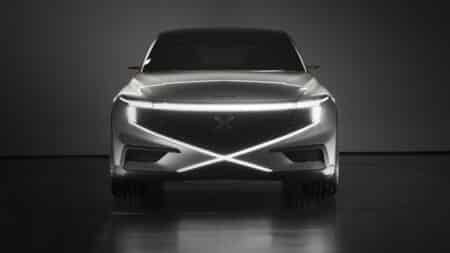
While battery-powered EVs are gaining the most traction in the US and Europe, hydrogen-powered vehicles are offering a serious alternative. Hydrogen EVs currently offer a longer range than battery-powered ones and can be refueled far more quickly, yet the infrastructure being built in the West is overwhelmingly geared toward batteries. Should automotive brands hedge their bets and develop both types of solution, or survey the landscape and pick a side? Will infrastructure develop in key markets to support both adequately anyway? These are important questions for manufacturers, and are reminiscent of the battle for supremacy between Blu-ray and HD-DVD in the 2000s. On that occasion, one format triumphed while the other disappeared.
Further ahead on the horizon, emerging technologies are going to deliver even more forms of emission-free vehicles affecting different types of manufacturers and service providers. Lightyear is a company developing vehicles that use solar panels to add further power between charges, meaning they could travel as far as 500 miles before its next plug-in; in the UK, the government recently awarded funding to Echion Technlogies to drive their work developing self-charging trains; while Swedish startup Candela is promising to revolutionize Stockholm’s public transport infrastructure with a fleet of flying electric hydrofoil ferries. And we haven’t even gotten round to airplanes yet.

Greener Airplanes
The aviation industry is experiencing more than its own fair share of disruption. Hydrogen-powered passenger planes could hit the market by 2035, and could accommodate hundreds more passengers per flight than planes can currently. Ultimately this could lead to cheaper and greener air travel, as lower or non-existent fuel duties and greater plane capacities offer consumers an inexpensive way to travel longer distances.
Other air-borne innovations are opening up the possibility of both super short haul and super long haul flying services. On the short side of the coin are passenger drones or ‘air taxis’. Powered by electricity, these will be small pilot-operated vehicles that can carry around four passengers distances of around 160km.

Already, Delta has invested $60m in air taxi startup Joby with a view to flying its customers from their own neighborhoods to the airport. Other airlines including Virgin Atlantic and American Airlines have placed orders for air taxis developed by British company Vertical Aerospace in partnership with Rolls-Royce and Honeywell.
At the other end of the spectrum is the possibility of much longer flying experiences, freed from the stigma associated with high fossil fuel consumption.
The return of airships like this offer a helpful reminder that innovation isn’t always about creating something entirely new. Often, innovation can be just as impactful when it reinvents a forgotten invention when the time is right to do so.
AI and Automation
After more than a decade of anticipation, the age of autonomous road vehicles is almost here. A full introduction to UK roads expected around 2026, while Chinese company Pony.ai is already carrying out driverless testing of its ‘robotaxis’ in Beijing.
The prospect of autonomous cars is not only driving innovation in the technology itself, but causing a radical rethink of cars as spaces. At CES this month, as Peugeot unveiled its Inception Concept, the company’s CEO Linda Jackson said that car is,” no longer a place to Journey from A to B; this is now an inspiring social space, to meet, to greet, create, relax, and if you wish, drive.”
The two greatest revolutions in road vehicle design since the invention of the car are not just far closer together than one would expect, they’re happening simultaneously. With so much pressure to innovate, and to innovate in multiple key areas at the same, an effective innovation management program has never been more essential for automotive brands.
Service Innovation in Transportation: The Next Generation of Customer Experiences
In this section, we’ll explore how some of the same drivers we’ve been talking about are leading to innovations in the customer experience in passenger transportation. If you are considering how to implement similar innovations into your organization, a fantastic source of ideas will be your customers themselves. What do they expect from you? And do your product innovations have a knock-on effect that requires new services to sit alongside them?
Services Linked to Green Innovations
A perfect example of that second question is the way that EV manufacturers are offering services for consumers to enjoy while they recharge their cars. Audi is rolling out its own charging hubs with lounges where drivers of its cars can relax while they wait. Volvo has partnered with Starbucks to install EV chargers at locations along a 1,350 mile route between Denver and Seattle. Any EV driver will be able to pay to use these chargers, but Volvo drivers will be able to charge at no cost, or at lower rates.
Whereas gas stations and highway services are generally provided by third parties, the EV revolution is transforming automotive companies into retailers and hospitality service providers as they seek to offer branded experiences to their customers and wider target market. Tesla is even working on a project that combines EV charging stations with a diner and drive-in movie theater.

Consumer demand for sustainable transport is changing the shape of rail services too. Services such as Nightjet and others are leading a resurgence in the sleeper train as consumers are willing to trade speed for more comfortable experiences.
Mobility-as-a-Service (MaaS)
Big data is enabling radical changes to the way customers can plan and pay for public transport. MaaS combines multiple datasets from various transport providers to offer a single digital touchpoint to pay for journeys that might combine car share or taxis, rail, buses and e-bikes in a single transaction. Users can enter their destination and a MaaS app will suggest the quickest or cheapest routes covering every leg of the journey.
Helsinki’s Whim app has led the way since 2016, offering travelers both pay-per-ride and subscription payment options. The rest of the world has been slow to catch up, but MaaS is finally expected to make big waves in urban transport around the globe.
Passenger Entertainment
Technology is also leading to new and immersive entertainment experiences for passengers. Both British Airways and Alaska Airlines have trialed Skylight’s VR headsets for customers flying first class, offering the wearer 3D and 360° cinematic experiences. Skylights is an alumni of British Airways parent company’s startup accelerator program.
Another transport brand funding innovative passenger experiences is Audi, which holds a minority stake in Holoride. Holoride transforms the real world around car passengers into a gamified virtual reality experience, shaped by real-life inputs such as bends in the road, acceleration and pedestrian crossings.
As autonomous cars reduce the amount of time spent driving, digital services like these can fill up what Audi is labelling ‘the 25th hour’; the extra hour each day made possible by driverless vehicles.
Driving Transport Industry Innovation with Innovation Management
All of the transport innovation trends we’ve explored so far relate to product and service innovations, but a third type of innovation, process innovation, can be just as valuable to organizations and help them to meet the challenges and opportunities of the future. Continuous improvement practices are used to deliver these incremental innovations to improve processes. For more on continuous improvement, head to our dedicated page.
Disruption is touching every corner of the transportation industry, and innovation is the only way to navigate through the turbulent changes ahead. Innovation management offers the most steady and certain roadmap to get there. As we’ve seen, several leading transport brands are funding or working with startups to incorporate their technology into their own innovations, and to do that an effective innovation technology scouting process is required.
This article has touched on several (but by no means all) of the trends shaping the industry, and the best way to capitalize on these and use them as fuel in an innovation program is by using trend management software.
Innovation management software, which incorporates all of these solutions and more, exists to help organizations innovate and take advantage of the types of opportunities we’ve explored in this article.
Click here to discover how automotive manufacturer Magna Powertrain is using Qmarkets software to drive its technology scouting and ideation growth lab. To discover the Qmarkets innovation ecosystem and how it can help your business, check out our product pages.